

CORN ETHANOL
Critics say it's time for a change.

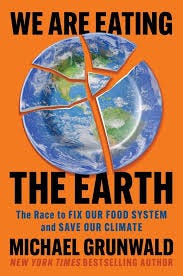
Michael Grunwald took six years to write We Are Eating the Earth. He came away with a realization: It’s not easy to change agriculture.
Grunwald’s book stresses that while fossil fuels remain our number-one problem when it comes to arrest global warming, agriculture comes in at number two.
Research by Princeton University’s Tim Searchinger identifies corn ethanol as a problem because it takes up too much land.
“To avoid the worst climate outcomes, we won’t just need to quit fossil fuels that emit carbon. We’ll also need to preserve ecosystems that store carbon,” noted Grunwald.
“The conversion of natural land into farmland and ranchland is also wiping out biodiverse habitats, driving the worst mass extinction since an asteroid wiped out the dinosaurs 66 million years ago,” Grunwald said.
“We simply can’t decarbonize the atmosphere if we keep vaporizing trees,” said Grunwald.
The problem with corn ethanol is that it’s gotten out of control. In the 1990s, only 3 to 5 million acres of the country’s 70 million corn acres were devoted to ethanol. Now ethanol claims 40 percent of the 95 million U.S. corn acres.
“A growing body of research reveals that America’s obsession with corn has a steep price: The fertilizer used to grow it is warming the planet and contaminating water,” noted Ames Alexander in a recent article for the nonprofit Floodlight newsroom.
Cancer rates in Iowa, the state that grows even more corn than Illinois, have been attributed to farm runoff in the state’s drinking water. Chris Jones, a candidate for Secretary of Agriculture, is urging Iowa farmers to diversify rather than simply jumping on the ethanol bandwagon.
But Alexander knows corn is too important to discount. “Corn is essential to the rural economy and to the world’s food supply, and researchers say the problem isn’t the corn itself. It’s how we grow it,” said Alexander.
“Corn farmers rely on heavy fertilizer use to sustain today’s high yields. When that nitrogen breaks down in the soil, it releases nitrous oxide, a greenhouse gas nearly 300 times more potent than carbon dioxide,” Alexander said.
“Federal subsidies make it more lucrative to grow corn than to diversify. The Environmental Working Group calculates that U.S. taxpayers have covered more than $50 billion in crop insurance premiums over the past 30 years,” said Alexander.
The uncomfortable truth is that corn, the most widely planted crop in Illinois and across the nation, is worsening climate change.
Meanwhile, Big Ag is spending big money to expand higher-ethanol gasoline blends and ethanol-based jet fuel.
Using U.S. fields for biofuels has become what Searchinger calls a land-use problem. “You can’t solve climate change if you’re going to make such terrible use of the land,” he said.
Grunwald also has a problem with all the land devoted to growing beef. He quotes Seachinger again: “Meat uses too much land. Just like ethanol.”
Nearly 80 percent of the world’s agricultural land is used to feed livestock, said Grunwald, saluting efforts to find alternatives to the problem.
A large part of We Are Eating the Earth is devoted to the ups and downs of start-ups and entrepreneurial efforts to solve our land-use problem—from the Impossible Whopper to vertical farms to a Florida fish farm that seeks to raise more salmon in one place than ever before to pongamia, a miracle tree that grows on arid land able to produce more oilseed than soybeans.
The future for agriculture will be challenging, said Grunwald. “We need to get the incentives right—so farmers can make money by making more food with less land; forests are worth more standing and storing carbon than logged and burned; and nations and corporations that want to shrink their carbon footprints get rewarded for shrinking the eating-the-earth problem,” he said.
To hear an interview with Michael Grunwald:
https://www.buzzsprout.com/1950812/episodes/19609151