

SYNC
As in the kitchen sink.

“Modern American life is absolutely steeped in video, which follows us, at every hour, from TV screens to smartphones to laptops, from movies to social media rants to workplace anti-harassment training modules. The soundtrack to most of it is some form of sync. This is partly because sync tends to be the cheapest and easiest option. But it’s also because sync is specifically crafted to be cut to video — and in a time when more and more of human communication involves editing video, this stuff is rapidly becoming our dominant form of music.”
That’s Ryan Francis Bradley, writing in the March 10, 2026 edition of the New York Times.
There’s nothing new here except maybe the terminology. After all, in a world that’s grown up with Muzak (now know as Mood Media, by the way, but still very much alive and kicking), background music has not only been around for a while but has often been a point of contention.
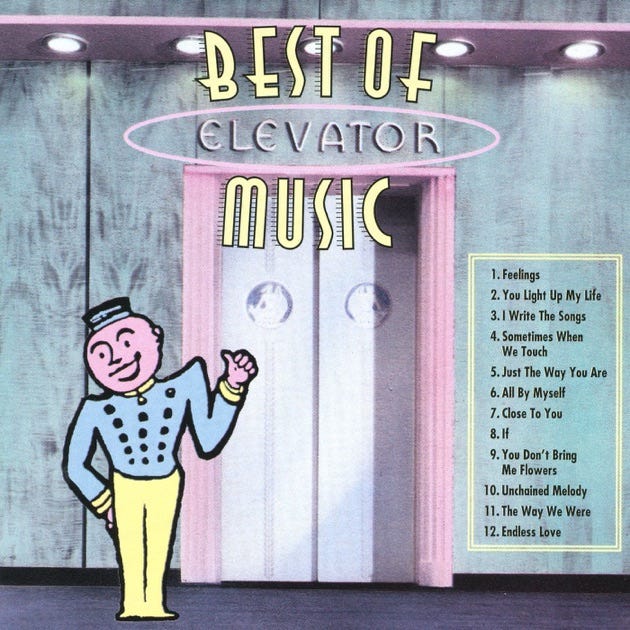
Let Joseph Lanza tell it. In his 2004 opus, Elevator Music, Lanza writes, “But just mention the words Muzak, easy-listening, or even contemporary instrumental, and many critics will lash out with judgements such as ‘boring,’ ‘dehumanized,’ ‘vapid,’ ‘cheesy,’ and (insult of insults) ‘elevator music.’ All these reactions appear to be based more on cultural prejudice than honest musical appraisal. In these supposedly ‘enlightened’ times, when people are compelled to think twice before passing blanket judgments on most cultures and their contributions, I find it inconsistent for the press (particularly the music press) to relegate ‘elevator music’ to a categorical pejorative with no questions asked.”
Bradley’s article in the Times focuses on where this sync is coming from, noting the companies that are busy collecting music for “vast sync libraries.”
“Some (tracks) are owned by platforms, like YouTube (around 150,000 tracks) and TikTok (more than a million, combining sync music with regular pop licensed from record labels). Others have names you’ve most likely never heard of, like Epidemic Sound (50,000) or Audio Network (300,000),” noted Bradley, who goes on to profile some of the musicians that toil getting tracks into the sync.
Background music, by any name, affects folks differently. Again Lanza: “Be it mellifluous Mantovani or Philip Glass parsimony, background music provides an illusion of distended time. It makes us feel more relaxed, contemplative, distracted from problems, and prone to whistle over chores we might find unbearable if forced to suffer them in silence. Yet for other hearers, such music can be a source of annoyance or anxiety. The sounds intended to cater to or quell the emotions can also sound aloof or haunting or intolerably peaceful, depending on the listener’s mind, ear, and past experiences.”
Now that we’re all steeped in video, as the Times reporter states, it might be worth recognizing that music can do more than just set the scene. Music can lull you into acceptance, distract you, delight you or madden you, depending on what the producer has in mind. Or haven’t you seen that Budweiser commercial that uses Lynyrd Skynyrd’s “Free Bird”?
A final word from Lanza: “Part of our social therapy is to bathe and swim in that ‘amniotic fluid’ not just to the sounds of Muzak but to all of the moodsong soundtracks that embellish our lives and that many ungratefully ignore, deride, or take for granted.”
A word of warning: don’t take the music for granted.